Rental tech automation: what PMCs must adopt now

Six months ago, a property manager in Destin told me their team spent 14 hours a week on guest messaging alone. Today, that same work takes less than two hours. The difference? Rental tech automation. And that shift is no longer optional for property management companies that want to stay competitive.
The vacation rental industry is moving fast. A 2026 industry report found that 60.7% of operators used AI in 2025, showing that digital tools have become a baseline expectation. According to Touch Stay’s 2026 Host Report, 82% of hosts now use at least one automation tool, and only 18% operate with no automation at all.
If you manage properties in Florida or anywhere in the Southeast US, this matters. The gap between tech-enabled operations and manual workflows is widening every quarter. And the cost of falling behind shows up in your owner retention, your response times and your profit margins.
What is rental tech automation and why does it matter now?
Rental tech automation means letting software handle the repetitive tasks that used to eat up your team’s time. Guest messaging, pricing adjustments, cleaning coordination, owner reporting. All of it can run on autopilot when you connect the right systems.
The 2026 shift is in how deep automation goes. Five years ago, a PMS just synced calendars. Now it writes guest replies with AI, flags suspicious bookings, adjusts minimum stays by lead time and feeds revenue data into your tax file.
Why does this matter now? Because the market has matured. Efficiency through better team management, guest service and property care is the top strategic priority for 2026, ahead of marketing, guest experience and portfolio expansion. Property managers are choosing operational excellence over growth because margins have gotten tighter.
Here is something most consultants won’t tell you: the best rental tech automation isn’t about replacing your team. It’s about freeing them to do work that actually requires human judgment. Handling a difficult owner call. Resolving a guest emergency. Building relationships with new property prospects. Your team can’t do that if they’re stuck answering “What’s the WiFi password?” for the hundredth time.
How does dynamic pricing impact your bottom line?
Does dynamic pricing really work, or is it just software vendor hype?
The data is clear. Dynamic pricing typically generates 10-20% more revenue than static pricing by adjusting rates several times a day based on demand, events and booking pace. The gain is largest during high-demand periods, when static pricing undervalues your nights.
In some markets, the difference reaches 30 percentage points in occupancy. Even in the relatively mature US market, dynamic pricing users outperform static-rate properties by 13 points.
But here is the part that gets overlooked. Dynamic pricing needs to be integrated with your vacation rental PMS to work properly. A standalone pricing tool that doesn’t sync instantly with your channel manager creates rate inconsistencies. And rate inconsistencies create double bookings, frustrated guests and refund requests.
Nearly one in three (32%) property managers now review market data weekly to guide pricing and strategy decisions. If you’re still setting rates seasonally and hoping for the best, you’re competing against operators who adjust daily.
The Florida vacation rental management market is especially sensitive to this. Between hurricane season uncertainty, last-minute booking trends and events like college bowl games or spring break peaks, static pricing leaves money everywhere. A Destin beach house that sits at $400 a night in July will struggle at $150 in November. But November may have a fishing tournament or a Thanksgiving peak that justifies $250. Your pricing tool should know that before you do.
What tech stack do PMCs really need in 2026?
The answer depends on the size of your portfolio, but the core components are consistent.
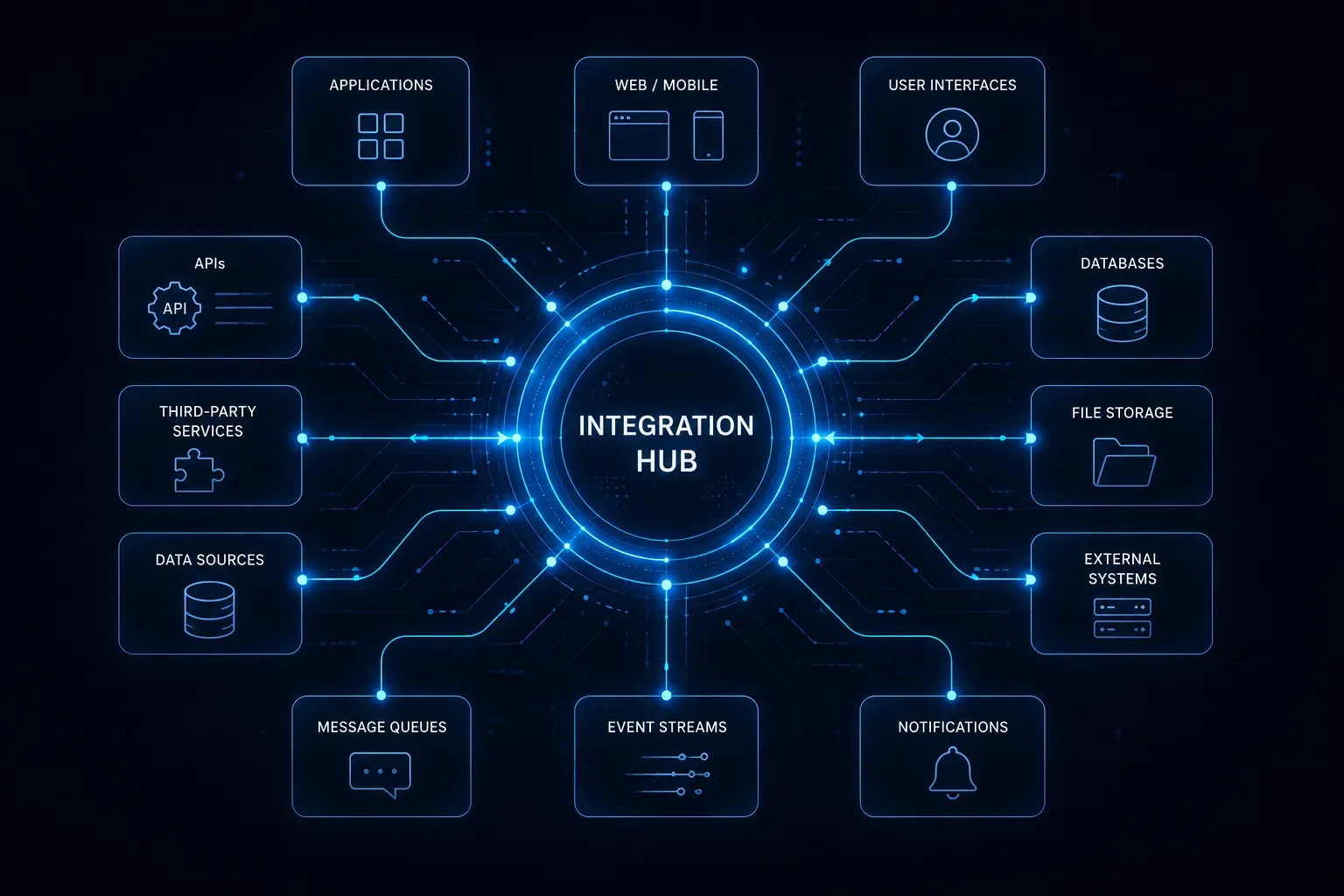
The technology trends that matter most for professional managers: a purpose-built PMS with integrated trust accounting, dynamic pricing integration, channel management that syncs in real time and owner portals that reduce the overhead of manual communication.
As one industry expert put it: “While in 2017 property managers needed 19 different tools just to get through the day, now they can have 80% of their tech stack covered between their PMS and their CRM.”
That consolidation matters for a practical reason: fewer integrations mean fewer points of failure. When your pricing tool doesn’t talk to your channel manager, or your guest messaging system doesn’t sync with your reservation data, you create gaps. Gaps become errors. Errors become bad reviews.
What should your Airbnb setup for PMCs include at a minimum?
A PMS that handles reservations, calendar sync and accounting in one place. Multichannel distribution to Airbnb, Vrbo, Booking.com and direct booking. Dynamic pricing that adjusts automatically based on real-time signals. Automated guest communication for confirmations, check-in instructions and reviews. And an owner portal where property owners can see performance without calling your office.
The right PMS centralizes reservations, automates guest communication, syncs calendars across platforms and provides revenue analytics, saving 15-20 hours a week while reducing double bookings to almost zero.
Why Florida PMCs face unique technology pressures
Florida vacation rental management operates under a specific regulatory environment that makes automation even more valuable.
Every vacation rental in Florida needs a DBPR license. Cities and counties cannot ban vacation rentals or regulate the duration or frequency of stays unless they had ordinances in place by June 1, 2011. But local registration requirements vary dramatically.
The city of Sarasota launched a municipal vacation rental registry with a seven-day minimum stay, occupancy limits and coordinated noise enforcement. Pinellas County requires a municipal Certificate of Use. In the Florida Keys, Monroe County allows rentals of fewer than 28 days only in specific zoning districts.
If you manage properties in several Florida counties, tracking these requirements manually becomes a full-time job. Your PMS should help you flag compliance dates, document license numbers and generate reports for local authorities.
42% of property managers expect local or state regulations to limit their ability to reach their 2026 goals, while 47% report operating under strict licensing or permit requirements.
This regulatory complexity is why rental tech automation pays dividends beyond simple time savings. When your system tracks compliance automatically, you avoid fines. Fines for operating without proper licensing or violating local regulations start at $1,000 a day for first offenses and escalate to $5,000 a day for repeat violations.
Making the transition without disrupting operations
Switching systems or adding new tools always carries risk. Properties don’t stop taking bookings while you migrate data.
Start with your biggest pain point. If guest communication eats up your team’s time, automate messaging first. If your owners constantly ask for reports, implement an owner portal. If your pricing feels random, integrate dynamic pricing.
Don’t try to change everything at once. The property management companies that succeed with rental tech automation do it incrementally. They test one improvement, measure the results and then move on to the next.
And involve your team early. The front-desk staff who currently answer repetitive guest questions will be your best source of automation rules. They know which questions come up ten times a day. Those are your first candidates.
The vacation rental market rewards professionalization. Technology has gone from a simple convenience to a fundamental requirement for operational excellence and revenue protection. The PMCs that adopt this mindset, and the tools that support it, will be the ones still growing five years from now.
Ready to see how an all-in-one PMS can simplify your Florida property management? MAPRO integrates Airbnb, Vrbo, Booking.com and Rentals United in a single platform designed for professional PMCs. Book a demo to see how it fits your operation.