How technology separates thriving vacation rental PMCs from those falling behind in 2026
If you manage vacation rentals in Florida, you already know that 2026 feels different. The post-pandemic boom has cooled. Supply keeps growing while occupancy stays flat. And guests expect instant responses at 11pm on a Saturday when you’re trying to have dinner with your family.
This is not a downturn year, and it’s not a boom year. It’s a transition. The short-term rental industry is becoming more competitive, more professional, and more strategic. The property management companies pulling ahead right now are not the ones with the biggest portfolios or the flashiest marketing. They’re the ones whose technology actually works.
I’ve watched PMCs in both Florida and Brazil struggle with the same problem for years: they add tools, but they don’t add clarity. Another dashboard, another login, another integration that half-syncs. If this sounds familiar, you’re not alone.
What does AI adoption really look like for property management companies?
The numbers are hard to ignore. 61% of short-term rental operators now use AI, with adoption jumping even higher among operators managing larger properties. But here’s what the stats don’t tell you: most of that adoption is shallow. A chatbot here. A pricing suggestion there. The real question is whether AI is reducing your workload or just adding another thing to check.
The best AI tools for vacation rental management in 2026 can achieve 70 to 90 percent automation rates on guest messaging. That means out of every 10 messages your properties receive, only 1 to 3 require human intervention. That’s the difference between hiring another guest services rep and not.
AI now handles up to 60% of routine guest queries unedited, freeing staff to focus on complex service needs. It handles low-value inquiries automatically, freeing up precious human staff capacity for high-stakes interactions. The Florida vacation rental management companies I see succeeding are the ones treating AI as triage, not replacement. The system handles the WiFi password questions and the early check-in requests. Your team handles the plumbing emergencies and the upset guests.
One thing I’ve learned from running operations in humid coastal markets: the operational complexity scales faster than the revenue. A 50-property portfolio in Panama City Beach has more moving parts than most people realize, from housekeeping coordination during back-to-back turnovers to managing owner expectations when a hurricane warning pops up. Your vacation rental PMS needs to reduce that complexity, not mirror it.
Why does dynamic pricing matter more in 2026 than ever before?
Properties using high-frequency dynamic pricing achieve up to 30% higher occupancy than those on static rates. In Italy, the gap reaches 30 percentage points. Even in the relatively mature US market, dynamic pricing users outperform static-rate properties by 13 points.
Properties employing dynamic pricing can see annual revenue boosts of 10-40% and a 10.7% increase in revenue per available room. But there’s a catch that most vendors won’t tell you: dynamic pricing only works if your data is clean and your pricing tool actually talks to your PMS in real time.
I’ve seen property management companies in Florida running three different pricing tools across different clusters of properties because no single integration worked reliably with their systems. That’s not a technology strategy. That’s a patchwork that will eventually fail during your busiest week of the year.
Booking lead times continue to compress across U.S. vacation rental markets, even during traditionally high-demand periods. Last-minute demand requires dynamic pricing, not set-it-and-forget-it rates. If you’re still pricing by season with a few manual adjustments for holidays, you’re leaving money on the table during micro-events that you might not even know are happening. A three-day fishing tournament can spike demand in a Gulf Coast market. A cancelled concert can crater it.
The Airbnb for PMCs model that worked in 2019, where you could list properties and wait for bookings, is over. By end of 2026, dynamic pricing is expected to be the industry baseline. The window for competitive advantage through early adoption is closing.
The tech stack problem nobody talks about
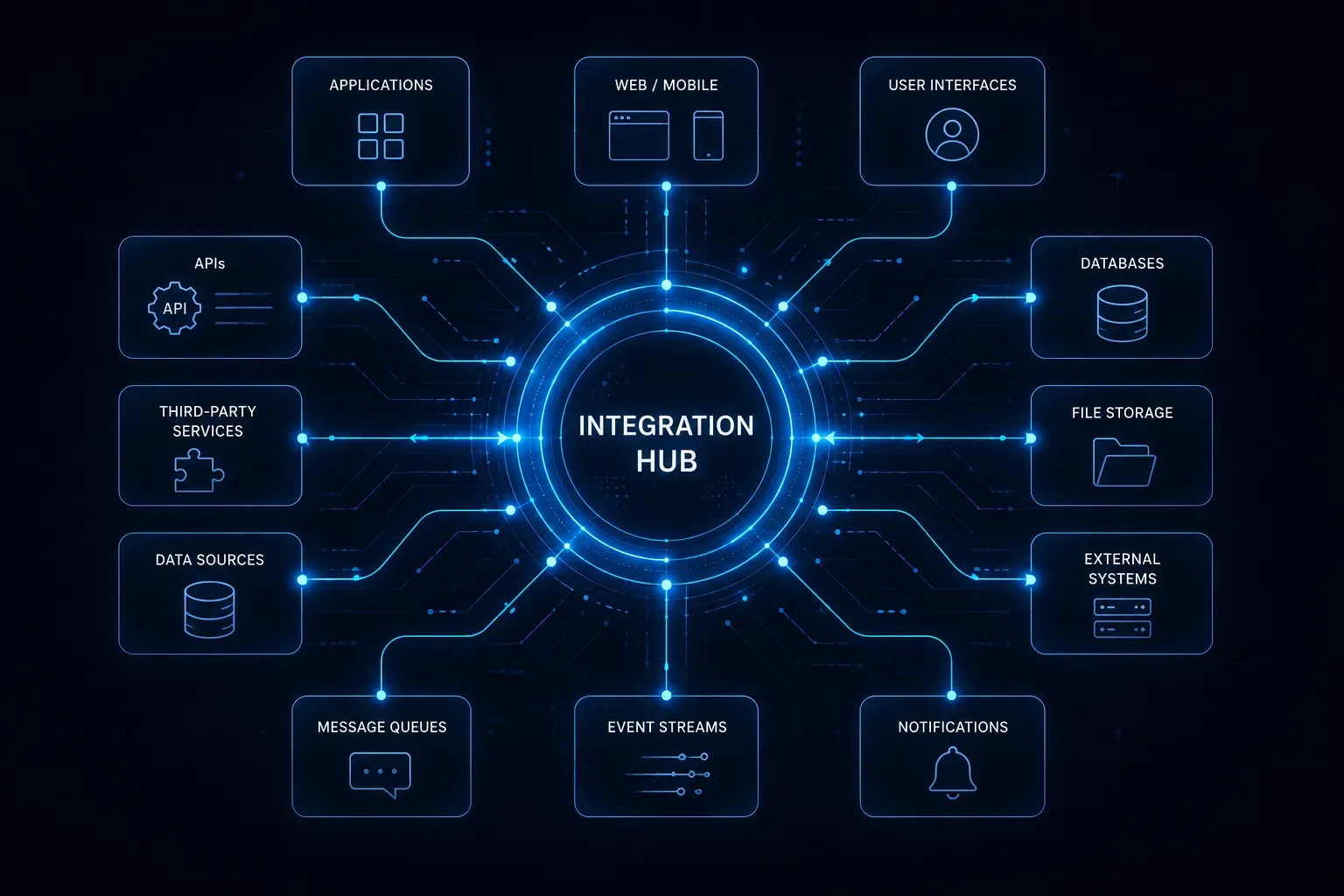
Here’s something that rarely makes it into vendor marketing: your messaging bot doesn’t know what your pricing tool just flagged. Your task automation can’t read your guest conversations. Your fraud detection runs on generic rulesets instead of your actual reservation data. Each tool is smart in isolation. Together, they’re a fragmented stack that still depends on you to connect the dots.
In 2017, property managers needed 19 different tools just to get through the day. Now they can have 80% of their tech stack covered between their PMS and their CRM. That’s real progress, but only if you’ve actually consolidated.
Across 2026 vacation rental industry forecasts, technology maturity is emerging as a defining theme, not through flashy tools, but through rising expectations around data quality, system reliability, and operational integration. As beach and coastal markets grow more competitive, technology is no longer a differentiator on its own, but foundational infrastructure for operating at scale.
For Florida vacation rental management specifically, this means your tech decisions have direct revenue implications. Florida continues to dominate the U.S. short-term rental market, accounting for 26% of national STR activity and generating nearly $30 billion annually. But the vacation rental market is going strong, it evolved from the pandemic boom, and the demand is still there. The market became competitive because there are more vacation rentals available.
That competition makes operational efficiency non-negotiable. Nearly one in three property managers now review market data weekly to guide pricing and strategy decisions. If you’re reviewing monthly, you’re already behind.
What separates the PMCs that grow from those that stall
There is a well-known ceiling in the vacation rental industry. Most property management companies and concierge services stall between 15 and 25 properties. The reason is simple: guest communication scales linearly with your portfolio, but your team does not.
The companies that break through that ceiling usually share a few characteristics. They have a single source of truth for reservations, owner data, and financial reporting. Their channel management syncs in real time, not on a delay that leads to double bookings. And their team can answer an owner’s question about last month’s performance without opening four different systems.
Five years ago, most vacation rental management companies used roughly the same technology stack. Today, the gap between well-tooled and under-tooled operations is visible in their owner retention rates, their staff efficiency, and their ability to scale.
I’ve also noticed that the best operators think about technology in terms of what it allows them to stop doing. Not what features it adds, but what tasks it removes. If your new tool doesn’t eliminate at least one manual process within the first 30 days, it probably wasn’t the right investment.
Most operators have a direct booking website. But most operators are not getting meaningful volume from it. Nearly two-thirds of operators generate less than 25% of bookings through direct channels, and a notable portion receive none at all. Building that direct booking capability is important, but it requires the right infrastructure underneath it, including a PMS that handles trust accounting, a booking engine that works on mobile, and a CRM that actually captures guest data you can use later.
Where to start if your tech is holding you back
If you’re running 20 or more properties and still fighting your systems instead of using them, the first step isn’t adding another tool. It’s auditing what you have. Which integrations are actually syncing? Which reports take more than two clicks to pull? Where does your team spend time on tasks that should be automated?
The property management companies that will thrive in Florida’s competitive market over the next few years are the ones making these decisions now. Not because the technology is exciting, but because it lets them focus on what actually matters: keeping owners happy, delivering great guest experiences, and growing without burning out their teams.
If you’re evaluating your options for an all-in-one vacation rental PMS that connects Airbnb, Vrbo, Booking, and Rentals United in a single platform, MAPRO was built specifically for property management companies like yours. It might be worth a conversation.